Exposure and Underexposure

What if a man can draw and wants to make a video of his story? He's no good with animation and learning to animate from scratch can take too long. So what does he do?

Filosophy Friday: Plato's Crito

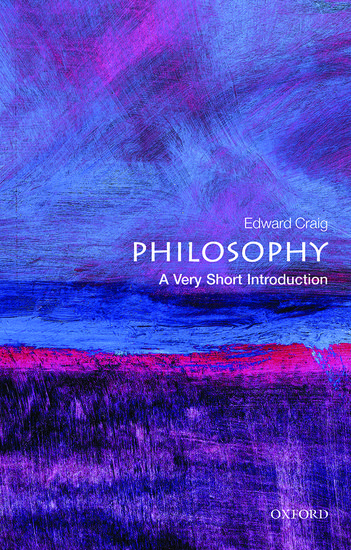
Hey everybody and welcome to this week’s edition of Filosophy Friday. This is the second part of a series where I explore a book in my possession, ‘Philosophy: A Very Short Introduction’ by Edward Craig as a kind of beginner’s primer to the wide subject of philosophy. If you...

On The Origin of Vampires And Werewolves

In the gloomy countryside of Transylvania, where the wolves howl and the children of the night make their ‘vonderful’ music, sits a small village, its name lost to time. In one of the village hovels, old Igor sits in his chair smoking a pipe, gently puffing on the smoke and blowing circles...

If you are going [...]

Blog Abandonment Issues

Miss me? No? Not even a little bit? That' harsh, that is.

The Archive of Stories and Scribbles

Chill out, calm down, feel the vibe. In the mood for a story, poem, whatever? Tired of reading about hate, about war, about people running their mouths about every tiny thing they can think of? Here, nothing matters. Words are a puff of smoke in the wind; mine are rose scented.

Showing posts with label Filosophy Friday. Show all posts

Friday, March 11, 2011

Filosophy Friday: Let’s Read ‘Philosophy: A Very Short Introduction’ by Edward Craig, Part 2

Hey everybody and welcome to this week’s edition of Filosophy Friday. This is the second part of a series where I explore a book in my possession, ‘Philosophy: A Very Short Introduction’ by Edward Craig as a kind of beginner’s primer to the wide subject of philosophy. If you missed the first one, you can find it in the handy dandy sidebar to your left, where it says ‘Filosophy Friday Archive’.
First off I’d like to apologise for posting so darned late, when it’s almost Saturday already, but time and tide waits for no man, as they say, so I kinda found myself only free at this very moment. I’d also like to try some new features to speed up the blogging process, so I’m kinda alt-tabbing between the blogging and the feature testing and whatnot. Once again, I apologise.

Okay, so reading back on the first post, I was struck by what a mess it was. Me and Farra both like things to be neat and orderly, so you can imagine how horrified I was to read it in retrospect and find out that the ideas presented in the post were a mess. So now, I’d like to try a different tack; read the chapter first, let it simmer, then type out a short summary. Hopefully this way I get it all organised and stuff and shit.

Today we’ll be looking at Chapter 2 of the book, entitled; “What Should I do? Plato’s Crito”. If you remember in the first chapter, the author presented three essential philosophical questions: What Should I Do, How Do We Know, and What Is There, or What Is the Nature of Things? He will explore each of these by presenting us with a particular philosophical view that attempts to answer each of these, which provides a nice entry into the very wide subject of philosophy.

Now, on with the show.
By Unknown with 1 comment

Friday, March 4, 2011

Filosophy Friday: Let’s Read ‘Philosophy: A Very Short Introduction’ by Edward Craig, Part 1

For the next few weeks (if I’m going chapter by chapter, eight) I’ll be going through this book my dad picked up at the UM bookstore, called Philosophy: A Very Short Introduction by Edward Craig. It’s a very good introduction to philosophy, and one that you can spend days wracking your head over even if it is, as the author claims, just a roadmap to the study of philosophy. It explores a few concepts, points us in the general direction of a few good philosophers and their works, and hopefully armed with this knowledge we can ourselves have a working knowledge of philosophy with which we can hold a fruitful discussion.

I am not going to reproduce the text of the book, not only due to copyright issues but also because it’ll be a hell of a job. It’s not so thick, in fact it’s thin enough to fit in a pocket, but it’s still too much work for a side project. While typing this out I still found it was quite a job, so luckily I didn’t try it. Also I think it’s better for me to try and decipher and discuss the various points highlighted by the author. Any quotes from the author will be marked with quote marks ‘like this’. It’s also important for me to highlight that I’m expanding and adding to what the author says, and any parts which are unclear or deserve a specific example I can call to my mind will be expounded upon. Philosophy, after all, isn’t a subject to be memorised and accepted at face value, but one to be criticised and discussed, so I will do just that.

By Unknown with No comments

Friday, February 25, 2011

Filosophy Friday: "Saying the Darndest Things"

(Note: Posted this before on Facebook. Reposted for the sake of having a proper 'Filosophy Friday' column.)

"You keep using that word. I do not think it means what you think it means."
- Inigo Montoya, The Princess Bride

We've all noticed people saying things we consider stupid. But wherein comes this unutterably horrible offense to the intelligent psyche? I propose these postulations to help explain this phenomenon.

Postulation 1: Words are expression of thoughts and ideas.
Postulation 2: Thoughts and ideas are generated by sensory input.
Thus, What Goes Out is What Comes In.

Let's examine these postulations and see what I mean by it. Postulation 1 states that whatever we say betrays our inner thoughts and ideas. You might go, "So what else is new?" Fair enough, it isn't. Of course when we express ourselves, we are expressing our own thoughts and ideas, and may in fact betray our own emotions about the subject. For instance, simply saying, "Lapar sial," carries with it first, relaying that the speaker is hungry, in fact hungry enough to comment on it. From here we can also deduce a few things; the speaker is in fact giving an invitation to the recipient for lunch or dinner or munchies. The usage of the word 'sial' can give us a clue to either the education level of the speaker, how strongly the speaker feels about his subject, and perhaps the company he is in. Thus, no matter how much (or how little) the speaker says, there's something we can learn about how the speaker thinks.

By Unknown with No comments